What We Gripe about When We Gripe about Grammar

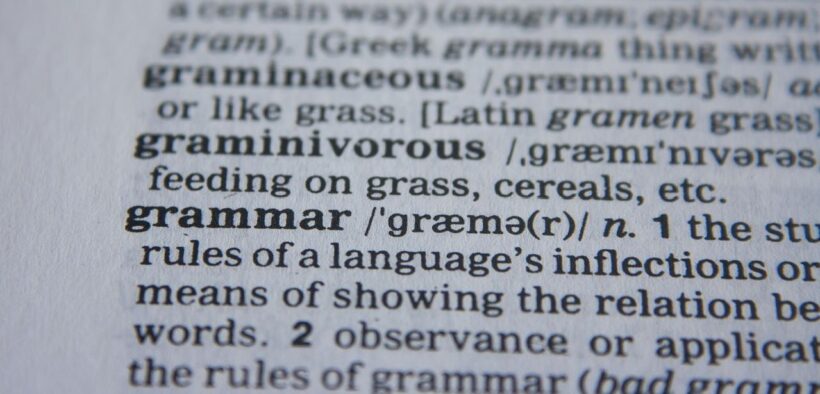
Image by PDPics from Pixabay
Over 40 years of teaching, I’ve been to enough departmental grading norming sessions and scoring workshops to notice that not even English teachers agree on exactly what the term grammar means. For example, some of my colleagues get really bent out of shape when a student begins a sentence with the adverb hopefully, although as Peter Sokolowski in Merriam-Webster’s Ask the Editor points out, there’s nothing wrong with using hopefully as a sentence adverb, or disjunct, meaning “I hope,” just we often use frankly in the same manner: “Frankly, it doesn’t bother me at all when students use the adverb ‘hopefully’ in the initial position in a sentence.”


To continue reading, you must be a Teaching Professor Subscriber. Please log in or sign up for full access.

2 Responses

  1. Good points; I do think it goes deeper than this, though. I’ve been collared by a fair number of colleagues who don’t teach writing and want to complain about their students’ writing. Often they point to grammar, mechanics, usage, spelling, etc. because they are concrete and quantifiable. With a little listening and digging, we often find that it’s a matter of organization, vague generalizations, lack of knowledge of the profession’s writing conventions, and so on. That’s a more specialized, and sometimes nebulous, set of problems. Thankfully they are not insurmountable.

Leave a Reply

This site uses Akismet to reduce spam. Learn how your comment data is processed.

Related Articles

I have two loves: teaching and learning. Although I love them for different reasons, I’ve been passionate about...
In my classes, there is a reaction from my students that I have learned to wait for. It...
“Focus on what you can control” is hardly groundbreaking advice. Yet when I read David Gooblar’s version of...
AI can assist in nearly any teaching task, saving educators many hours of work while improving instruction via...
For many, Richard Feynman (1918–1988), the Nobel Prize–winning physicist turned cultural icon, is the prototype of a creative...
Every semester, we conclude our courses with grades, reflections, and the quiet hope that, somehow, what we have...
Teaching in fast-moving fields with real cases presents three persistent problems. First, the news cycle moves more rapidly...

Create a free account, or log in.

Gain access to limited free articles, news alerts, and select newsletters

Login here

Get unlimited access to The Teaching Professor

Stay informed. Subscribe Now.

WELCOME OFFER

$19.00 $14.00/month

for your first 6 months. Use coupon code TP6MO.

$19.00 thereafter. Cancel anytime.

Enjoy unlimited access to all of The Teaching Professor

You only have  free article views remaining.

WELCOME OFFER

$19.00 $14.00/month

for your first 6 months. Use coupon code TP6MO.

$19.00 a month thereafter. Cancel anytime.