Why Grade Limits Won’t Solve Grade Inflation

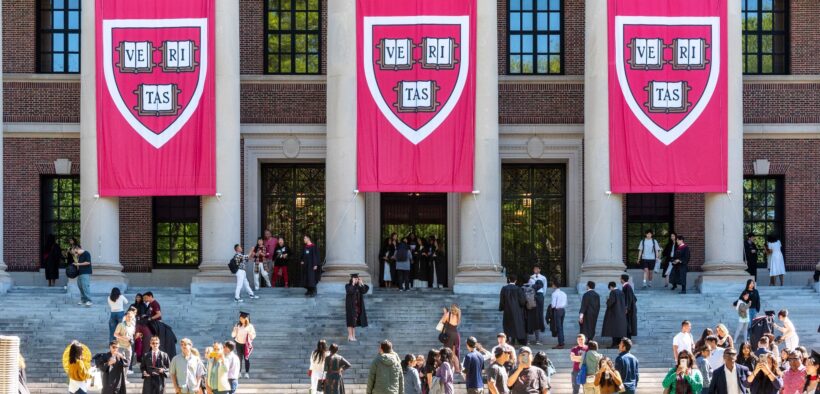
Widener Memorial Library at Harvard University, with Veritas banners hanging and throngs of students on the steps
Credit: iStock/Steve Rosenbach
As I write, the faculty at Harvard have just voted to limit the number of A grades they award in any undergraduate course to a maximum of 20 percent of class enrollment in an effort to combat grade inflation (McMurtrie, 2026). This policy is an arbitrary solution to a real problem. My father liked to tell a story about his first year in the chemical engineering program at the University of Texas. He registered for a physics class intended for high-achieving students. On the first exam, the lowest score was 93 out of 100. Would it make any sense to award As only to the top 20 percent? Clearly not; everyone did well and showed mastery of the material. Differences in scores probably reflected random differences in conscientiousness, silly mistakes, and who wasn’t feeling their best that day. The purpose of setting a limit on the number of A grades is to differentiate among students, but that assumes reliability and validity in grading. For reliability, the same students should score consistently in the top 20 percent on each exam. Validity means that the differences in grades reflect real differences in learning and understanding. The grade limit becomes meaningless if random nonacademic factors dictate who scores at the top and there aren’t meaningful differences in mastery among grades.


To continue reading, you must be a Teaching Professor Subscriber. Please log in or sign up for full access.

Leave a Reply

This site uses Akismet to reduce spam. Learn how your comment data is processed.

Related Articles

I have two loves: teaching and learning. Although I love them for different reasons, I’ve been passionate about...
I recently presented a nationwide webinar for students on using effective study strategies. When students signed up, they...
If you are teaching college today, you know of all the difficulties caused by ill-prepared students, disruptive students,...
Higher education conversations about AI often begin with fear: students using it to shortcut learning or generate finished...
With Christopher Nolan’s star-studded The Odyssey drawing fresh attention to the epic, I’ve been wondering whether teachers might...
As a former book-loving kid and still voracious adult reader, it feels strange to admit that I never...
Being a social psychologist has come in handy all my life. Often students will ask me what I...

Create a free account, or log in.

Gain access to limited free articles, news alerts, and select newsletters

This field is for validation purposes and should be left unchanged.

Login here

Get unlimited access to The Teaching Professor

Stay informed. Subscribe Now.

WELCOME OFFER

$19.00 $14.00/month

for your first 6 months. Use coupon code TP6MO.

$19.00 thereafter. Cancel anytime.

Enjoy unlimited access to all of The Teaching Professor

You only have  free article views remaining.

WELCOME OFFER

$19.00 $14.00/month

for your first 6 months. Use coupon code TP6MO.

$19.00 a month thereafter. Cancel anytime.